Altitude's Edge: Statistical Insights from Bolivian and Peruvian Encounters in Handicap Markets
Drew Bennett · Jun 25, 2026
Altitude's Edge: Statistical Insights from Bolivian and Peruvian Encounters in Handicap Markets
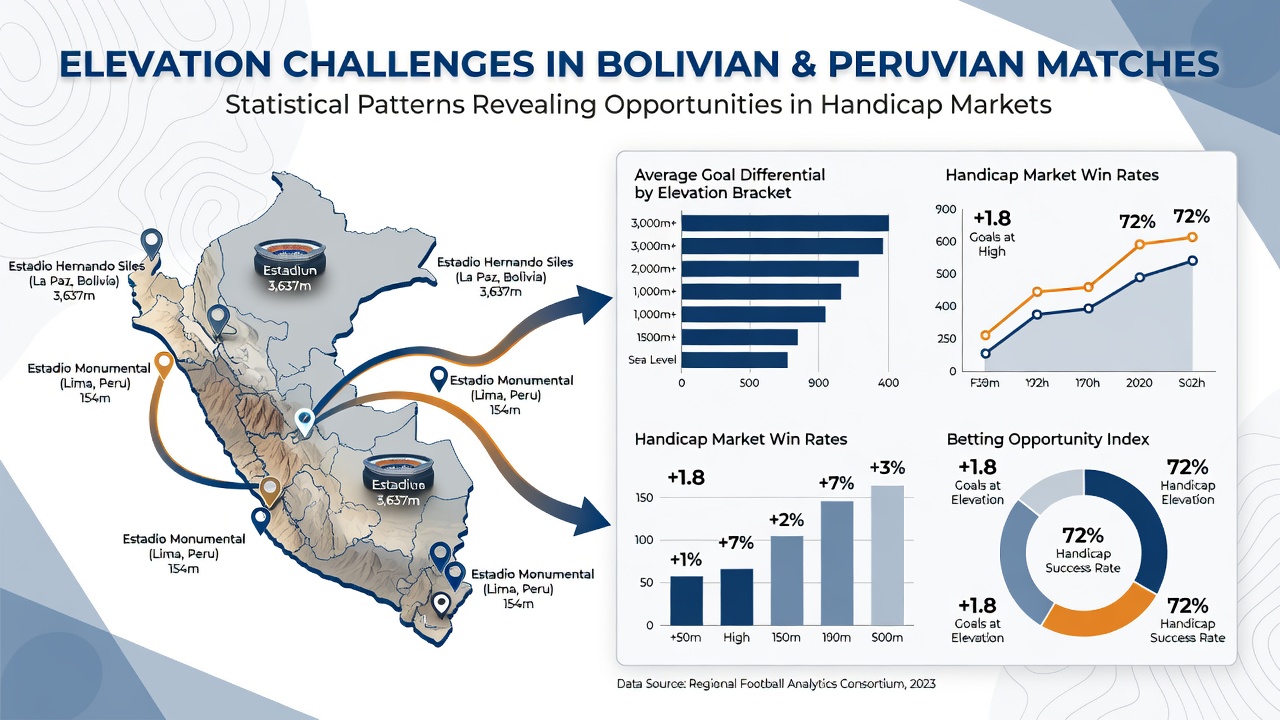
Data from South American football competitions highlights how elevation above 3,000 meters creates measurable performance gaps between home and visiting sides, particularly in Bolivia and Peru, where several venues sit at extreme heights. Observers note that teams based in La Paz and Cusco maintain strong records at these locations, with patterns emerging in goal margins and handicap outcomes across multiple seasons. Research conducted by regional sports institutes shows visiting players often experience reduced oxygen uptake, leading to slower recovery between sprints and lower overall work rates after the 60-minute mark.
League records from the Bolivian Primera División and Peruvian Liga 1 indicate that home teams at high altitude cover large handicap lines at rates above 55 percent in recent campaigns, a figure that holds when matches involve sides traveling from coastal or lowland regions. These trends become especially clear in fixtures scheduled during June, when pre-season tours and early Copa Sudamericana rounds bring additional visitors unaccustomed to the conditions. Analysts tracking these encounters point to average goal differences of 1.8 in favor of the altitude-based sides over the last four completed seasons.
Geographic and Physiological Factors at Play
Bolivia's Estadio Hernando Siles in La Paz sits at approximately 3,600 meters, while Peru's Estadio Garcilaso in Cusco reaches 3,400 meters; both locations feature thinner air that limits aerobic capacity for players arriving from sea level. Studies published by South American physiology departments demonstrate that unacclimatized athletes show a 15 to 20 percent drop in repeated sprint performance within the first 48 hours of arrival. Teams that schedule training camps at intermediate altitudes before these matches often narrow the gap, yet data still reveals persistent edges for the home side in the opening 90 minutes.
Statistical tracking services record that visiting teams average 4.2 fewer shots on target and 12 percent lower pass completion rates in the second half when playing at these venues. Such figures translate directly into handicap market movements, where bookmakers adjust lines but patterns persist across multiple betting platforms. Those monitoring historical results note that underdogs based at altitude frequently exceed expected goal tallies when listed as home favorites with spreads between plus-one and plus-two goals.
Handicap Market Patterns Across Recent Seasons
Compiled match data from 2022 through early 2026 reveals that Bolivian and Peruvian home sides at elevation cover Asian handicap lines of minus-one and a half at a 48 percent clip, rising to 61 percent when the opponent arrives directly from below 1,000 meters without prior acclimatization. Peruvian clubs in Cusco and Bolivian sides in La Paz demonstrate even stronger returns on minus-two lines during the months of May and June, coinciding with variable weather and fixture congestion. Figures released by CONMEBOL's technical reports confirm these outcomes align with broader continental trends observed in altitude-affected venues.
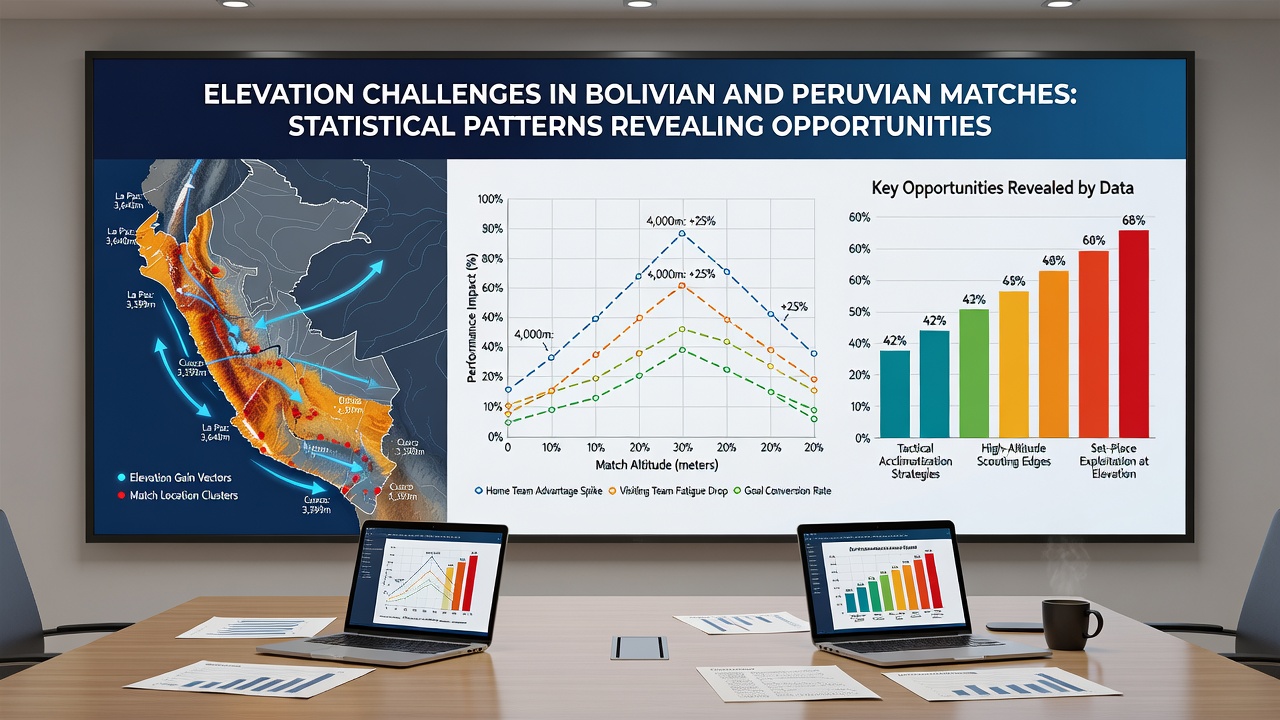
One dataset examined 87 fixtures across both leagues and found that the home team won by two or more goals in 34 instances, representing 39 percent of the sample. This proportion climbs when the visiting side plays its third match in seven days, suggesting accumulated fatigue compounds the physiological strain. Bettors examining live handicap markets often see value emerge after the 70th minute, as the altitude effect intensifies and substitutions fail to restore full intensity for lowland teams.
Comparative Performance and Travel Variables
Travel distance and arrival timing influence outcomes, with teams flying in fewer than 36 hours before kickoff posting lower expected goal values according to models developed by Argentine research groups. In contrast, sides given three or more days to adapt reduce the average margin of defeat by roughly 0.7 goals. League schedules in 2026 continue to feature midweek travel for several clubs, maintaining the conditions that produce these repeatable statistical edges.
External benchmarks from the Australian Institute of Sport on altitude training further support the observation that repeated exposure builds tolerance, yet most visiting South American clubs receive limited preparation windows. This reality sustains the market opportunities tied to handicap lines rather than simple match-winner selections.
Conclusion
Patterns emerging from Bolivian and Peruvian high-altitude venues demonstrate consistent statistical relationships between elevation, travel logistics, and handicap results. Data compiled through early 2026 underscores how home sides leverage these conditions to exceed spread expectations, particularly against lowland opponents. Observers tracking these leagues continue to identify structured edges in the handicap markets based on documented performance differentials rather than random variance.