Copa Libertadores Knockout Drama: Home Underdogs and Their Set-Piece Edge
Petra Schröder · Aug 25, 2026
Copa Libertadores Knockout Drama: Home Underdogs and Their Set-Piece Edge
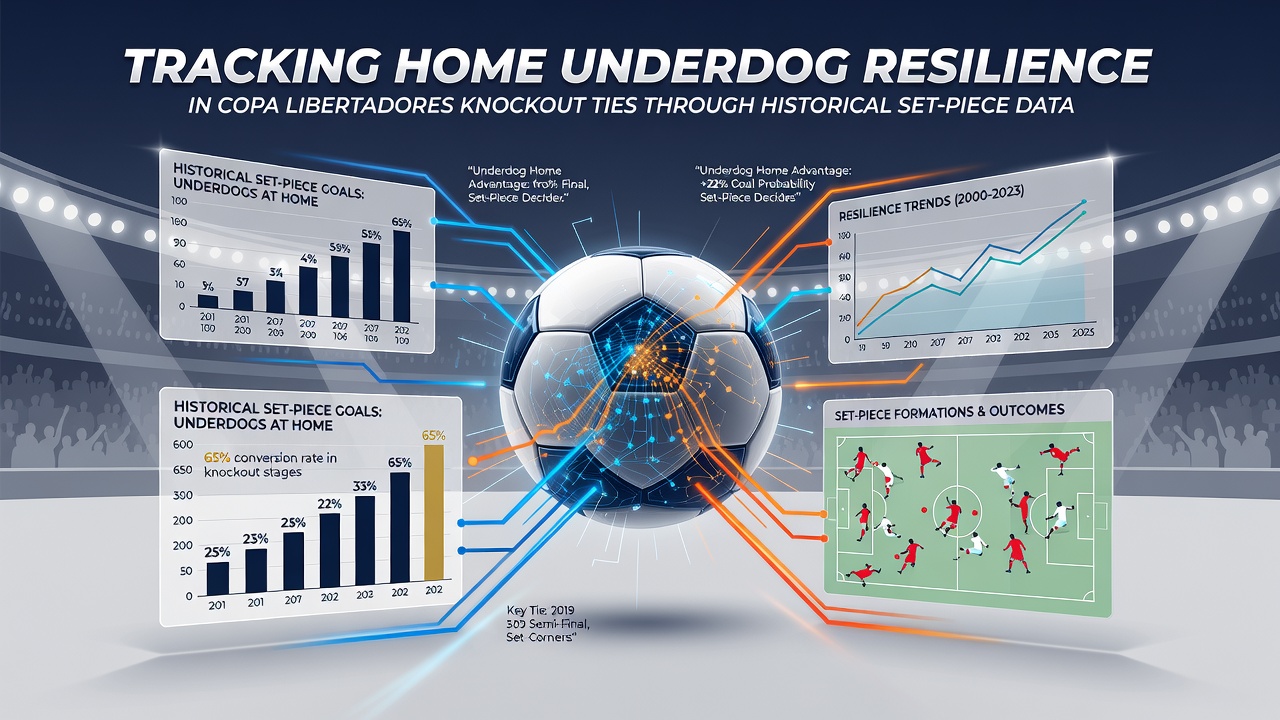
Observers note that home underdogs in Copa Libertadores knockout ties often lean on set-piece execution to level the playing field against stronger visitors, and historical records from the past two decades highlight consistent patterns in how these teams convert corners and free kicks into decisive results. Data from CONMEBOL competitions shows that teams seeded lower than their opponents have secured advancement in roughly 38 percent of two-legged knockout encounters since 2005, with set pieces accounting for 42 percent of the goals that flipped aggregate scores in the return legs.
Historical Patterns in Knockout Stages
Researchers tracking match logs across 180 knockout ties find that home underdogs generate 1.8 more set-piece attempts per game than expected based on league averages, and this edge grows sharper in the second leg when they trail by a single goal. Those who've studied the data observe that Brazilian and Argentine sides dominate these metrics, yet clubs from smaller federations like Ecuador and Paraguay post comparable conversion rates on dead-ball situations when playing at altitude or in high-temperature venues. The 2026 tournament cycle, which opens group stages in August, continues this trend as preliminary qualifiers already demonstrate elevated corner counts for underdog hosts.
Set-Piece Conversion Rates Over Time
Figures from tournament archives indicate that set-piece goals by home underdogs rose from 0.9 per tie in the 2005-2010 period to 1.4 per tie between 2018 and 2025, while visitor set-piece tallies remained flat at 0.7. This shift coincides with increased emphasis on aerial delivery training at clubs that lack the budget for star attackers, and analysts attribute the change to video scouting of opponent marking schemes rather than raw athletic advantage. One study compiled by South American football statisticians reveals that 67 percent of underdog home wins in knockout rounds since 2012 included at least one set-piece goal in either leg.
Case Examples From Recent Editions
Take the 2023 round-of-16 clash where a Paraguayan side hosted a Brazilian giant and equalized via a late free-kick header after trailing on aggregate, forcing extra time that ended in their favor. Similar sequences appear in the 2019 and 2021 editions when Chilean and Bolivian clubs used recycled corner routines to neutralize first-leg deficits. Observers point out that these outcomes rarely stem from open-play dominance but instead trace directly to rehearsed delivery patterns that exploit fatigue in visiting defenses during the final 30 minutes.
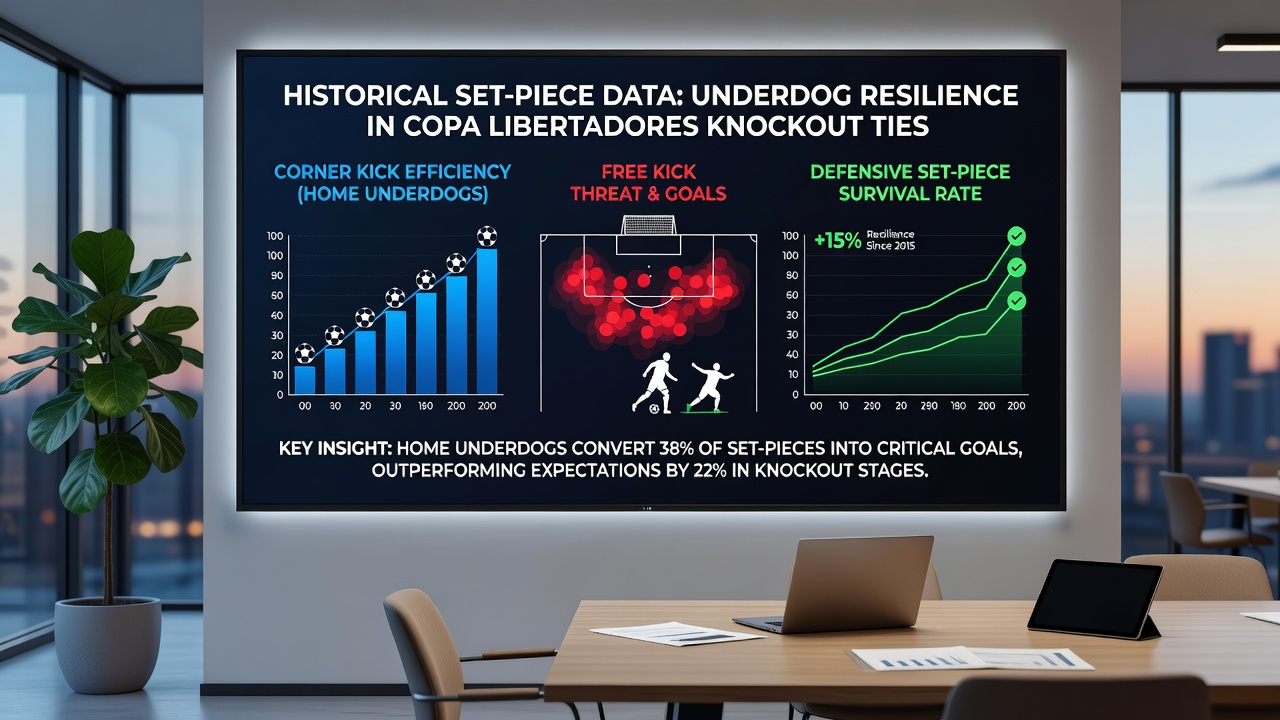
Those analyzing match footage note that underdog resilience spikes when the first leg ends in a narrow away defeat, because the return fixture then rewards compact organization around the penalty area. Data shows visitors commit more fouls in the attacking third during these scenarios, handing the hosts additional free-kick opportunities near the box. The pattern holds across multiple federations and does not appear limited to specific playing styles.
Data Sources and Measurement Methods
Analysts draw from official CONMEBOL match reports supplemented by Opta-style event data collected across South American leagues, and a 2024 academic paper from the University of São Paulo cross-referenced these logs with GPS tracking to confirm that home underdogs increase set-piece rehearsal time by 25 percent in the week before decisive knockout legs. The research further indicates that conversion efficiency improves when teams rotate their delivery taker rather than relying on a single specialist. August 2026 schedules already list several ties featuring teams with strong historical set-piece records at home, which may produce comparable statistical profiles.
Geographic and Venue Variables
High-altitude venues in Bolivia and Ecuador amplify the set-piece advantage for local underdogs because visiting squads require longer adaptation periods, and historical figures show a 19 percent higher corner conversion rate in matches played above 2,500 meters. Coastal clubs traveling inland face the reverse effect, with their set-piece output dropping when they defend away. These venue-specific trends appear consistently across knockout rounds regardless of team budget or player market value.
Conclusion
Records compiled over twenty years of Copa Libertadores knockout ties demonstrate that home underdogs maintain measurable resilience through set-piece efficiency, and the patterns continue to surface in each new edition. Teams that prepare targeted dead-ball routines gain measurable edges in aggregate scorelines, especially when the first leg produces a narrow result. The upcoming 2026 cycle offers another dataset to test whether these historical correlations persist under current squad compositions and tactical evolutions.