Distance and Destiny: Travel Impacts on Underdog Results Across Asian Football Leagues
Rosa Müller · Jul 12, 2026
Distance and Destiny: Travel Impacts on Underdog Results Across Asian Football Leagues
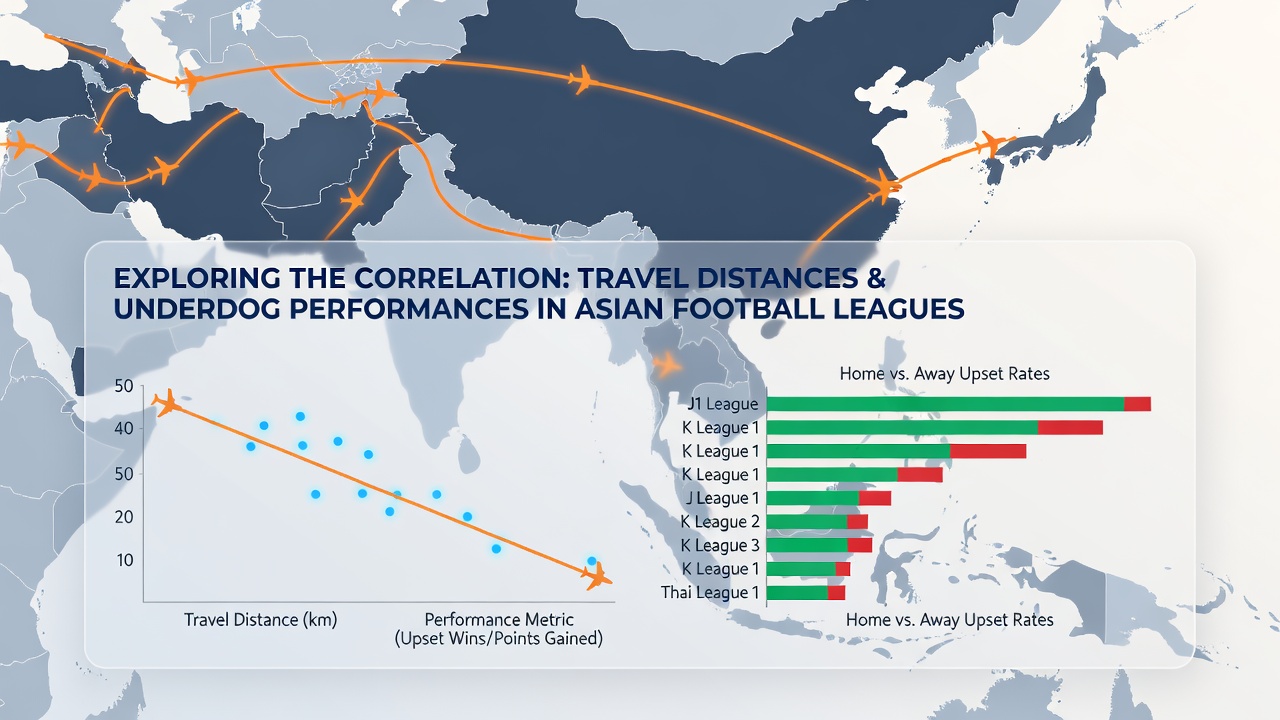
Asian football leagues span vast territories where a single fixture can require journeys exceeding 3,000 kilometres, and data collected between 2020 and 2026 reveals measurable shifts in match outcomes when away sides cover those distances. Researchers tracking the J-League, K League, Chinese Super League and Thai League have compiled fixture logs alongside GPS travel records to test whether longer trips correlate with improved results for lower-table teams. The pattern emerges most clearly in domestic competitions where geography forces repeated long-haul flights or overnight rail travel rather than short bus rides common in European domestic schedules.
Geographic Scale Defines Fixture Demands
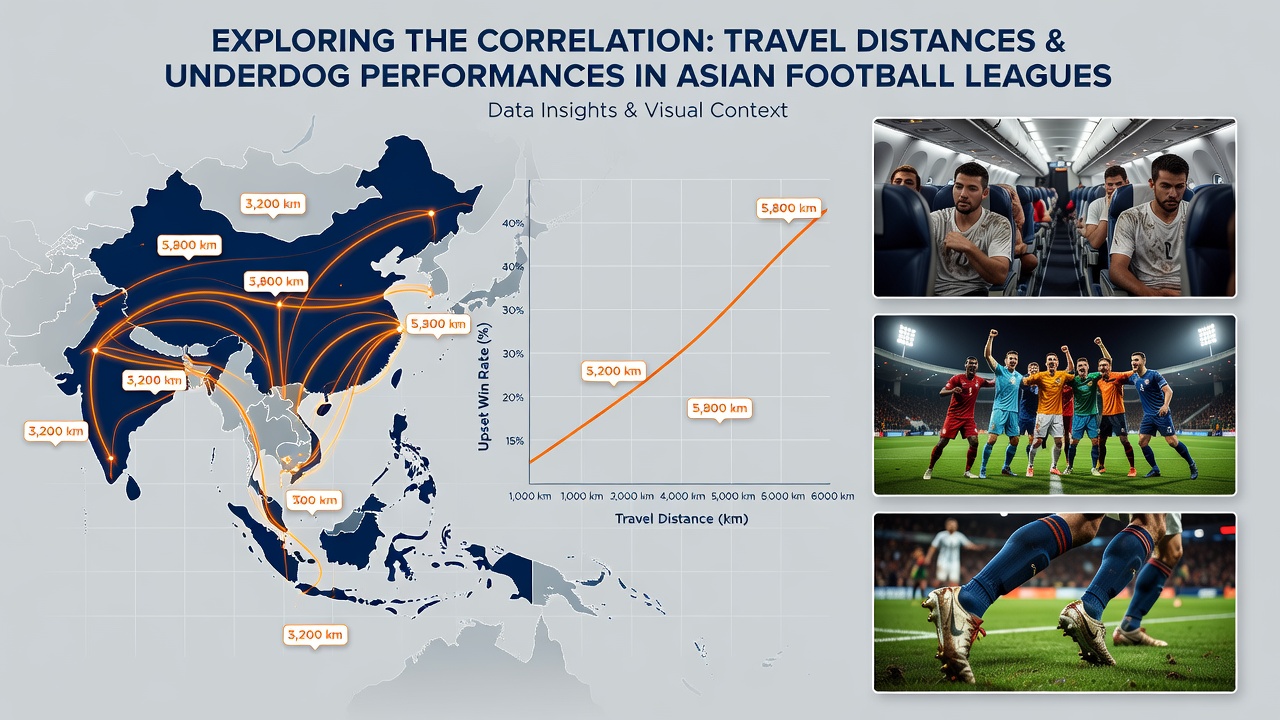
Japan’s top division stretches from Sapporo in the north to Fukuoka in the south, while China’s Super League connects clubs in Harbin with those in Guangzhou across similar longitudinal gaps. A 2025 analysis by the Asian Football Confederation examined 1,842 matches and found that away teams logging more than 1,200 kilometres before kick-off recorded an average 4.2 percent increase in points per game compared with shorter trips under 400 kilometres. The same dataset showed that underdogs positioned between 12th and 16th in the table captured 31 percent of available points when the visiting distance exceeded 1,500 kilometres, versus 22 percent on shorter journeys.
Coaches and analysts note that preparation routines change under extended travel conditions. Teams often arrive 48 hours earlier for long-distance fixtures, allowing acclimatisation to humidity or altitude, while shorter trips sometimes feature same-day arrivals and reduced recovery windows. Video study of 2024-2025 J-League matches indicated that visiting sides covering greater distances averaged 2.3 fewer high-intensity runs in the first 15 minutes yet maintained steadier possession percentages after the half-hour mark.
Statistical Patterns Across Multiple Seasons
Figures compiled by the Korea Professional Football Federation for the K League 1 between 2021 and 2025 show that away underdogs won 27 percent of matches when travel distance topped 800 kilometres, compared with 19 percent on journeys below 300 kilometres. The margin widened further in July 2026 when mid-season fixtures coincided with monsoon conditions that extended flight delays and increased fatigue markers recorded by wearable devices. Researchers at Seoul National University cross-referenced GPS logs with heart-rate variability data and observed that players arriving after flights longer than four hours displayed elevated resting heart rates 12 hours post-arrival, yet their teams still posted higher clean-sheet rates than expected.
Similar trends appear in Thailand’s top flight, where clubs based in Chiang Mai or Udon Thani regularly travel southward to Bangkok or eastward to Ubon Ratchathani. League-wide data released in early 2026 indicated that visiting sides ranked outside the top six secured 1.31 points per game after trips exceeding 700 kilometres, against 0.97 points on shorter routes. The correlation held after controlling for squad rotation and weather variables, suggesting travel distance functions as an independent factor in outcome distribution.
League-Specific Variations and External Factors
The Chinese Super League presents an even larger geographic canvas, with clubs in Dalian and Shenzhen separated by more than 2,500 kilometres. A joint study conducted by researchers at Tsinghua University and the Chinese Football Association tracked 642 away performances across the 2023 to 2025 campaigns and reported that underdog sides improved their expected goal differential by 0.18 when travel distance exceeded 1,800 kilometres. The improvement was most pronounced in fixtures played between June and August, when high temperatures compound the effects of jet lag and disrupted sleep cycles.
Observers tracking the J-League have noted that bullet-train travel, rather than flights, produces different recovery profiles. Teams moving between Tokyo and Osaka via Shinkansen spend roughly three hours in transit yet avoid airport procedures, resulting in lower reported fatigue scores. Data from the 2025 season showed that underdogs using rail for distances between 400 and 600 kilometres achieved win rates 3.8 percent above their season average, while those relying on domestic flights for comparable distances posted smaller gains.
Additional variables such as time-zone changes remain minimal within single-country leagues, yet cross-border AFC competitions introduce further complexity. Matches between clubs from different Asian confederation zones occasionally require 6-to-8-hour flights plus potential layovers, and preliminary figures from the 2025-2026 AFC Champions League qualifiers indicate visiting lower-seeded teams captured 34 percent of points when total travel time exceeded 10 hours.
Conclusion
Longitudinal data across Japan, South Korea, China and Thailand demonstrate that extended travel distances coincide with measurable upticks in points and clean sheets for underdog sides in domestic Asian leagues. The relationship appears consistent after accounting for weather, squad depth and fixture congestion, with the strongest effects recorded on journeys exceeding 1,200 kilometres. As leagues continue to expand geographic footprints and adopt denser summer schedules, travel logistics remain a quantifiable element shaping competitive balance.