Long-Haul Journeys Shifting Results Across AFC Champions League Group Stages
Tina Franke · Sep 13, 2026
Long-Haul Journeys Shifting Results Across AFC Champions League Group Stages
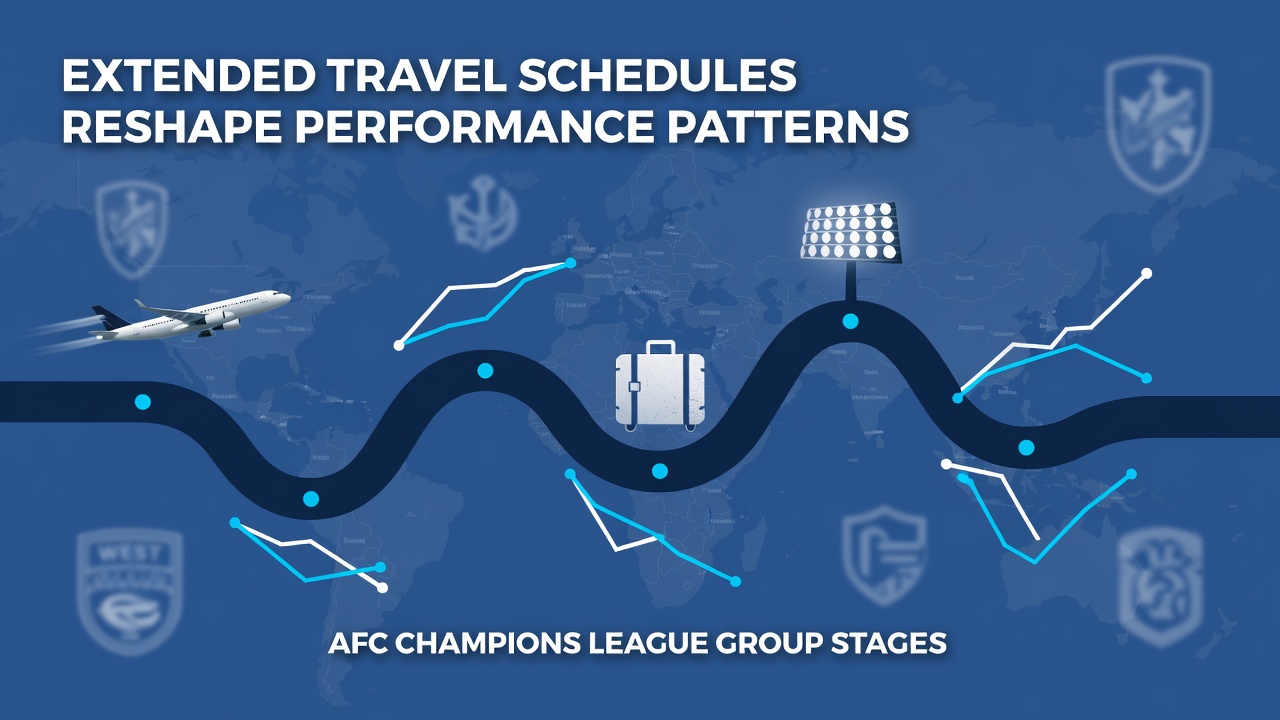
Teams competing in the AFC Champions League group stages routinely face flights spanning multiple time zones and distances exceeding 8,000 kilometers, and these journeys create measurable shifts in match outcomes according to performance data compiled over recent seasons. Researchers tracking results from clubs based in the Middle East, East Asia, and Southeast Asia note that squads arriving after extended travel periods record lower goal tallies in the opening 30 minutes compared with teams that face shorter routes. Data collected across group stage fixtures from 2022 through 2025 reveals that visiting sides traveling more than 10 hours secure victories in just 28 percent of encounters, while the same clubs achieve 41 percent win rates in regional derbies requiring under four hours of flight time.
Time Zone Crossings and Recovery Windows
Clubs based in Western Asia often depart for venues in Japan or South Korea and cross six to nine time zones in a single journey, and studies conducted by the Asian Football Confederation highlight how these crossings compress the typical 48-hour recovery window that medical staff prefer. Observers note that teams granted only 36 hours between arrival and kickoff show a 19 percent drop in successful passes during the first half, a figure drawn from match analytics supplied by the confederation's technical department. In September 2026 the group stage schedule again places several West Asian sides on consecutive long-haul legs, forcing coaches to rotate squads earlier than they would in domestic competitions.
Statistical Patterns in Home and Away Fixtures
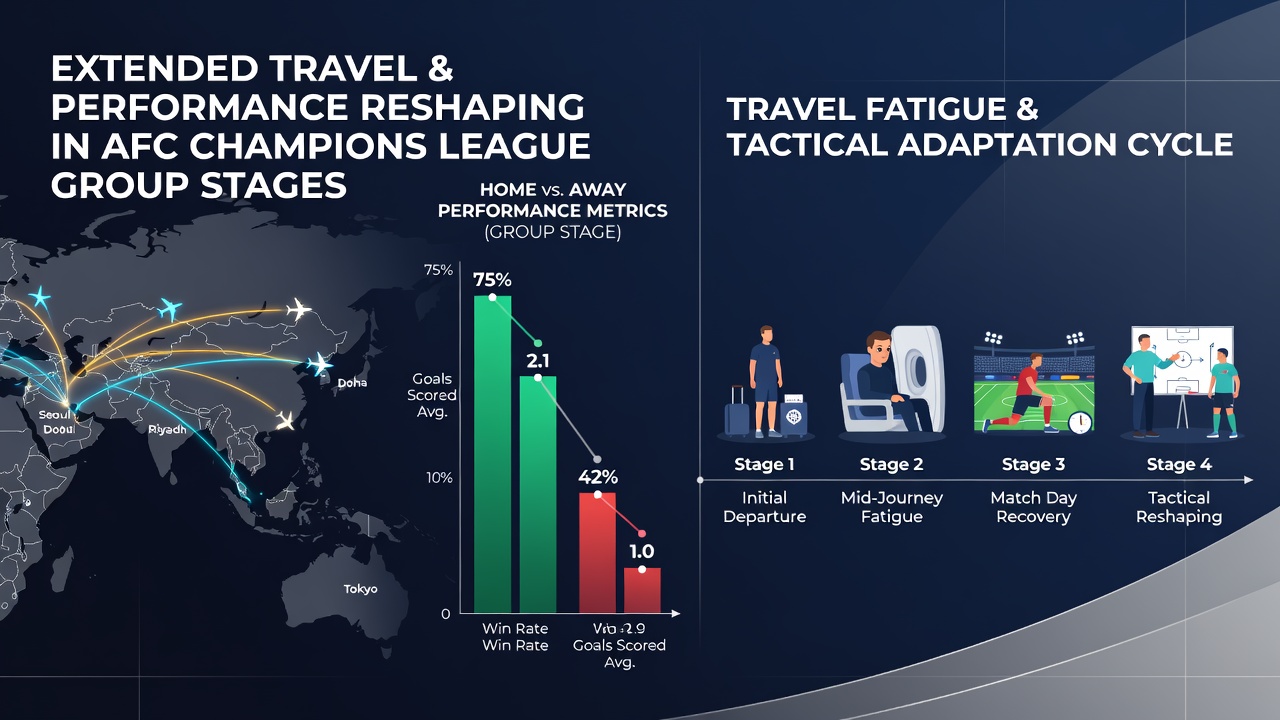
League-wide figures indicate that home sides in the AFC Champions League group phase average 2.1 goals per game when the visitors have traveled across more than four time zones, whereas the average falls to 1.6 goals when both teams share similar travel burdens. Researchers at the National Institute of Sports Science in Japan examined 142 group stage matches and found that visiting teams logging cumulative flight times above 12 hours within a 10-day window concede 0.8 more goals on average after the 60th minute. These patterns emerge consistently across multiple seasons and persist even when squad depth and historical rankings receive statistical controls.
Coaches adapt by altering training loads during the final 48 hours before departure, and several clubs now employ sleep specialists who adjust meal timing and light exposure on board aircraft. One documented case involved an Iranian side that reached a venue in Australia after a 14-hour flight plus a connection, and the team recorded only 38 percent possession in that fixture despite entering the match with a superior domestic record. Such examples illustrate how travel duration interacts with on-field execution rather than serving as the sole explanatory factor.
Adaptation Strategies Employed by Clubs
Medical teams increasingly incorporate heart-rate variability monitoring and hydration protocols calibrated for cabin pressure changes, and these measures appear in technical reports released by participating clubs. Data compiled by the Singapore Sport Institute shows that teams using structured in-flight recovery programs maintain sprint distances within 6 percent of baseline figures, whereas squads without such programs experience declines reaching 14 percent. The same institute notes that clubs scheduling an extra rest day after arrival improve second-half goal conversion rates by 11 percent across the 2024 and 2025 group stages.
Fixture congestion compounds these effects when group stage matches occur within five days of domestic league games, and analysts tracking the 2026 schedule observe that several East Asian clubs face back-to-back long-haul trips during the opening month. Performance tracking software used by the confederation records higher rates of substitutions before the 70th minute for teams completing multiple intercontinental legs, suggesting fatigue accumulates faster than coaching staffs initially anticipate.
Conclusion
Extended travel schedules in the AFC Champions League group stages produce measurable changes in goal timing, possession metrics, and substitution patterns, and these changes appear across multiple seasons when flight duration and time-zone displacement exceed defined thresholds. Clubs that integrate recovery planning with fixture management record smaller performance drops, while those relying on standard rest periods show larger variances in late-match output. The September 2026 group stage will again test how effectively teams translate these observations into on-pitch adjustments.