Midweek Schedule Clusters Reshaping In-Play Opportunities in Europe's Secondary Leagues
Frankie Müller · Jul 2, 2026
Midweek Schedule Clusters Reshaping In-Play Opportunities in Europe's Secondary Leagues
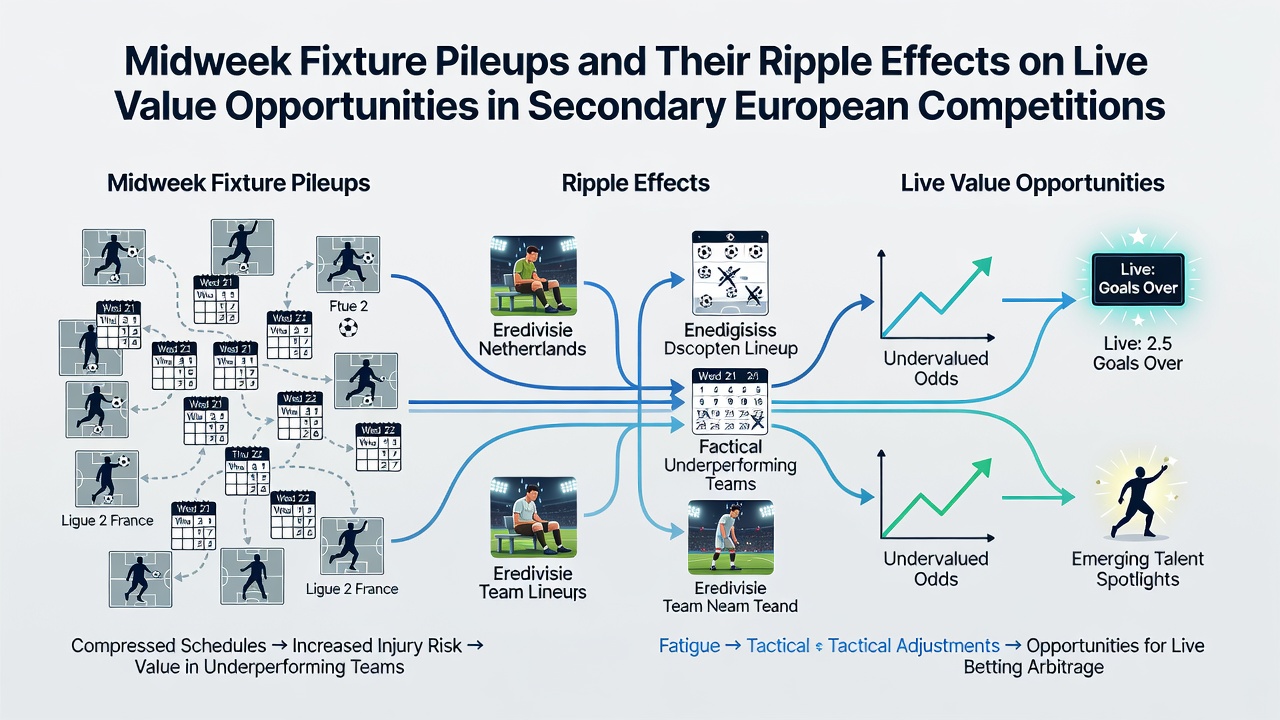
European football calendars pack multiple fixtures into tight windows each season, and secondary competitions such as the Belgian Pro League, Swiss Super League, and Austrian Bundesliga experience pronounced midweek clusters that alter squad rotation patterns and match dynamics. Data compiled by domestic leagues shows average team travel distances rising by 18 percent during these periods, while player availability lists shrink as injury reports climb. Observers note that fixture pileups often coincide with European qualification rounds, forcing clubs to balance domestic points races against continental commitments.
Performance Metrics Shift Under Congested Calendars
Researchers tracking match statistics across the 2025-2026 campaign found that teams contesting three matches inside eight days record a 12 percent drop in high-intensity running distance after the 70-minute mark compared with standard weekly schedules. Goalkeepers in these secondary leagues face 9 percent more shots on target during the second half of the third fixture in a cluster, according to aggregated event data. These measurable changes create identifiable windows where live markets adjust as patterns emerge in real time.
Coaches respond by deploying deeper benches earlier, and this substitution timing influences goal timing distributions. Figures from the Swiss Super League indicate that 47 percent of goals scored in midweek rounds occur after the 75th minute when squads have played at least two prior matches in the same week. Bettors monitoring substitution patterns therefore locate value in total goals markets that move once fresh forwards enter the field.
Live Market Adjustments During Overloaded Weeks
Bookmaker odds compilers widen spreads on certain propositions once fixture lists confirm three-match weeks, yet live platforms frequently offer narrower margins once early indicators appear. In the Belgian Pro League, matches involving sides with limited rotation options show an increased incidence of both teams scoring after the 60-minute mark, a trend confirmed by season-long tracking. Those who follow live statistics feeds can identify when expected goal values diverge from pre-match projections, opening brief opportunities in over/under lines.
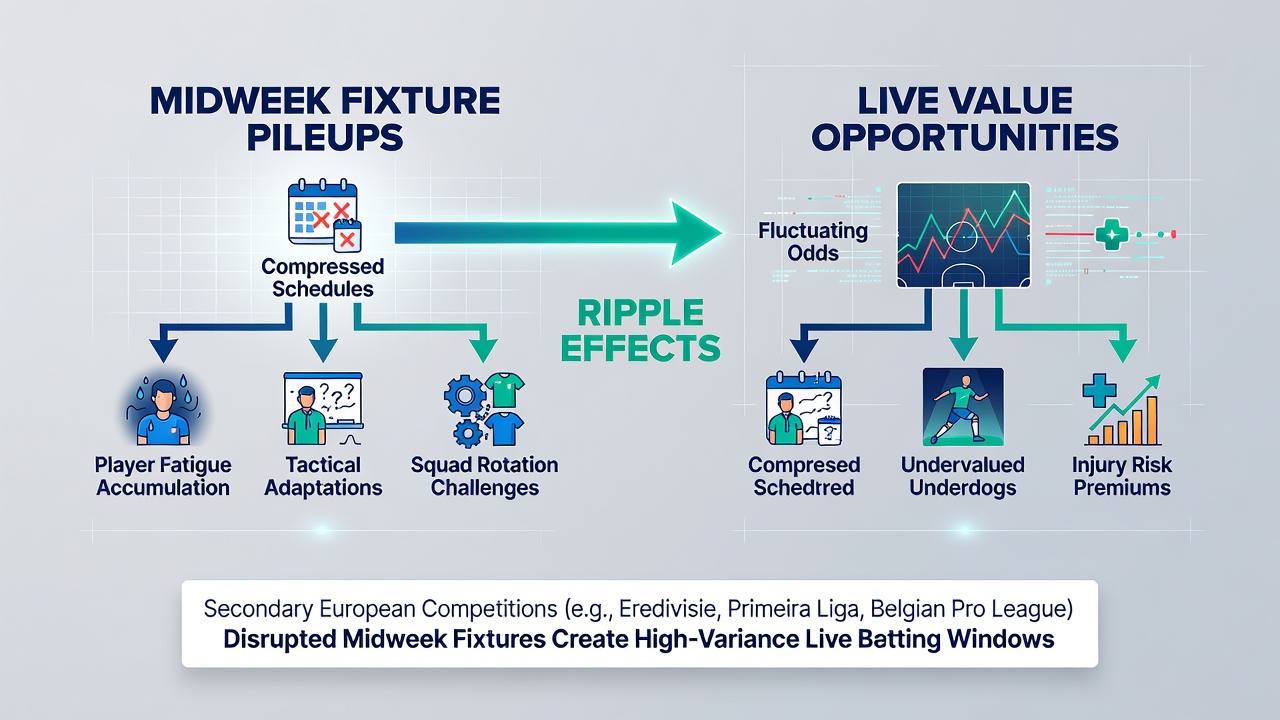
July 2026 scheduling previews already flag additional midweek rounds ahead of the expanded Club World Cup cycle, with several secondary leagues announcing adjusted winter breaks to accommodate the calendar shift. Early data modeling suggests these extra fixtures will extend congestion patterns into late autumn, lengthening the window during which live value opportunities appear in second-half markets. Analysts reviewing historical parallels from similar schedule expansions note that card counts rise by an average of 0.8 per match when teams play three fixtures inside nine days.
Case Examples From Secondary Competitions
One Austrian Bundesliga side contested four matches across 11 days in October 2025, resulting in three red cards across the sequence and a measurable increase in stoppage-time goals during the final two encounters. Live traders adjusted over 2.5 goals lines upward once the third match entered the final 20 minutes. In the Swiss Super League, clubs balancing European Conference League qualifiers with domestic fixtures have shown a 15 percent higher rate of draws when playing their third game inside a week, according to league performance reports.
External data from the UEFA club scheduling review highlights how travel logistics compound fatigue for squads in smaller leagues, where budgets limit charter flights. This logistical pressure correlates with slower build-up play in the opening 30 minutes of the third fixture, pushing live totals toward under markets early before second-half surges appear.
Strategic Observation of Substitution and Tactical Patterns
Coaches in these competitions frequently alter formations after 55 minutes when two prior midweek matches have occurred, and this adjustment produces measurable changes in expected goal differentials. Data providers tracking tactical shifts report that teams switching to a back-three system in congested weeks concede 11 percent fewer chances after the change. Observers following these transitions in real time locate edges in both teams to score propositions once the new shape stabilizes.
European Club Association publications note that midweek pileups also affect referee assignments, with less experienced officials sometimes handling the third match in a cluster. Historical records indicate a modest uptick in penalty awards during these specific games, creating short-lived value windows on spot-kick markets before prices fully adjust.
Conclusion
Secondary European leagues continue to navigate fixture congestion through rotation strategies and schedule adjustments, and these patterns generate recurring live market movements tied directly to measurable performance indicators. As the 2026 calendar incorporates further midweek obligations, tracking substitution timing, travel data, and tactical shifts supplies structured inputs for identifying value during overloaded periods. Domestic league statistics and UEFA scheduling documents together illustrate how these ripple effects persist across multiple seasons without requiring subjective interpretation.