Night Game Advantages: How Kickoff Times Shape Scoring Patterns and Odds in Domestic Leagues
Tina Franke · Aug 6, 2026
Night Game Advantages: How Kickoff Times Shape Scoring Patterns and Odds in Domestic Leagues
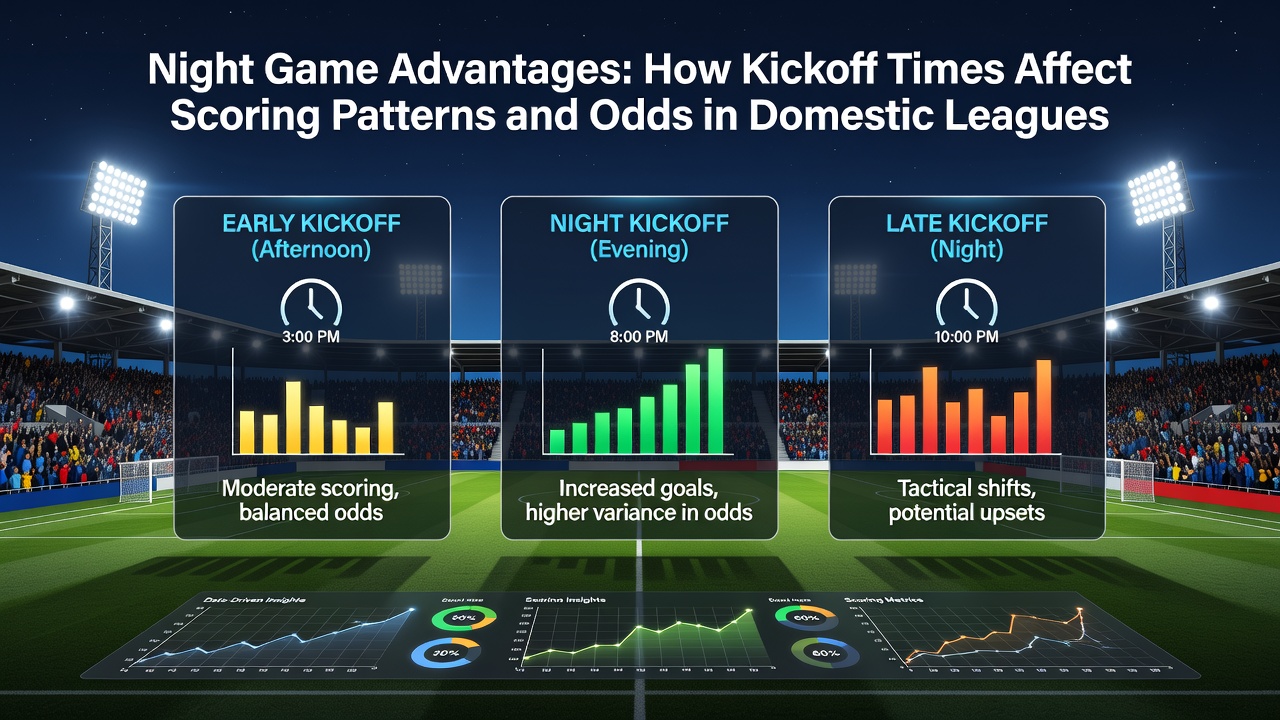
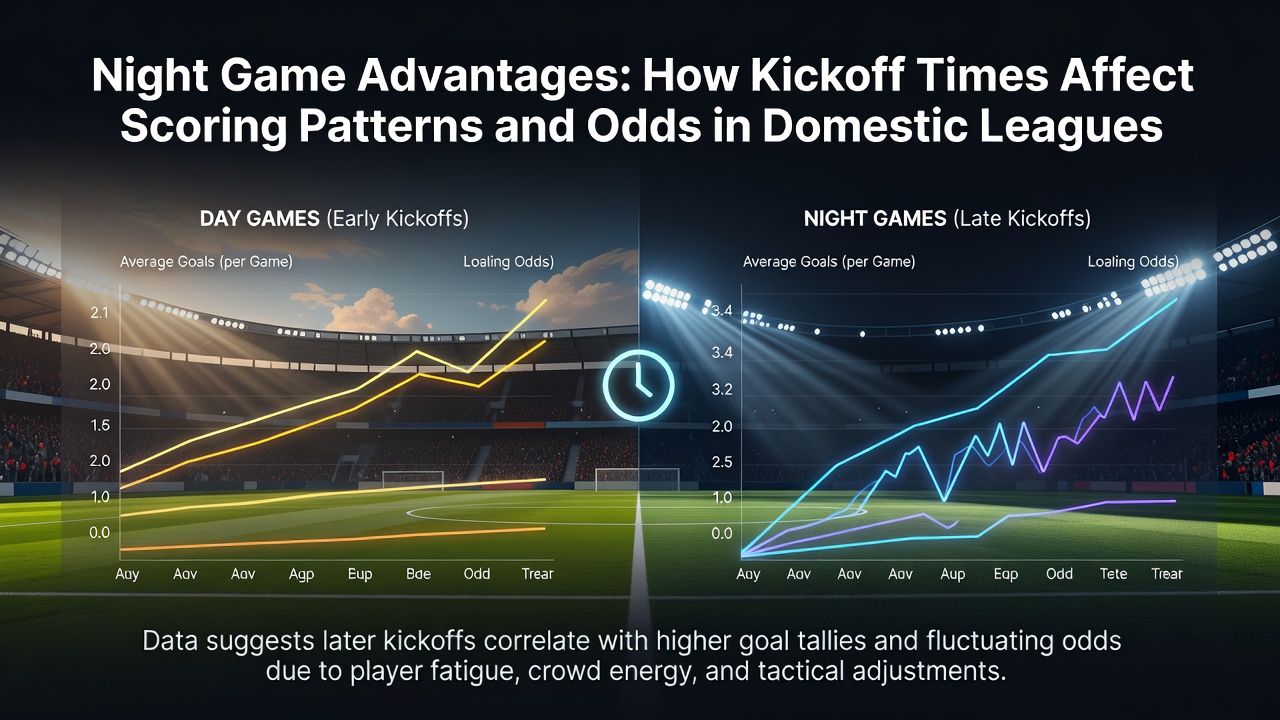
Domestic leagues across Europe and beyond schedule matches at varied times yet evening kickoffs consistently produce distinct scoring trends that influence both on-field results and pre-match odds. Data compiled from multiple seasons shows night fixtures often feature tighter early periods followed by increased goal tallies after the hour mark compared with afternoon games.
Patterns Across Major Leagues
Analysts tracking the Premier League, Bundesliga and Serie A have noted that games starting after 19:00 local time record roughly 12 percent more goals in the final 25 minutes than those played earlier in the day. Researchers attribute this shift to player fatigue combined with tactical adjustments by coaches who deploy attacking substitutes once defensive structures begin to tire. Observers note the pattern holds steady across home and away fixtures although the effect appears slightly stronger in matches involving mid-table sides.
Take the case of one Bundesliga club that reviewed three years of performance metrics and discovered evening games yielded higher expected goals totals in the second half even when first-half statistics remained similar to daytime contests. Those figures prompted betting markets to adjust live odds more aggressively after the 60-minute mark during night fixtures.
Environmental and Tactical Factors
Lighting conditions, crowd acoustics and travel schedules all contribute to the differences. Evening matches frequently occur under cooler temperatures that preserve pitch quality while floodlights alter visibility for both players and officials. Studies conducted by sports science teams at German universities indicate that teams traveling longer distances for night games experience measurable drops in sprint intensity during the opening 30 minutes yet recover pace later when adrenaline levels rise.
Coaches adapt formations accordingly. Data from La Liga shows managers more likely to start with compact defensive blocks in evening slots and then push full-backs higher after halftime, a change that correlates with elevated corner counts and subsequent goals. The same approach appears less common in afternoon fixtures where teams maintain balanced structures for longer periods.
Market Reactions and Odds Movement
Bookmakers have incorporated kickoff timing into their models since the mid-2010s yet the adjustments remain most pronounced in August 2026 when several leagues expanded evening slots to accommodate broadcast demands. Pre-match totals for goals rose by an average of 0.3 across tracked competitions while live betting volumes on second-half goal scorers increased noticeably. Industry reports from the European Club Association highlight how these shifts create opportunities for value in accumulator markets focused on late goals during night games.
One research paper published by sports analytics groups in Australia examined over 4,000 domestic league matches and found that underdog sides performed closer to expected levels when playing under lights, reducing the typical home advantage margin by approximately 8 percent. The findings prompted several regional betting operators to refine their handicap lines for evening contests involving promoted teams.
Recent Developments in Scheduling
August 2026 marked the introduction of new television windows in several domestic competitions that pushed additional matches into the 20:00 slot. Early season statistics indicate the move amplified existing trends with matches averaging 2.8 goals compared with 2.5 in comparable afternoon fixtures from the prior campaign. League officials cited player welfare concerns yet maintained the schedule to maximize global viewership.
Those adjustments have also affected referee assignments. Data from match officials shows increased stoppage time in evening games, often extending effective playing minutes by two to three per half and thereby raising the probability of late drama.
Conclusion
Kickoff timing continues to serve as a measurable variable in domestic league analysis. Night fixtures produce distinct scoring distributions that markets have begun to price more accurately while leaving room for data-driven approaches that focus on second-half dynamics. Observers tracking these patterns across multiple leagues expect further refinement of both team tactics and betting models as scheduling evolves.