Player Penalty Patterns Emerge from Domestic Cup Archives
Tina Franke · Jun 21, 2026
Player Penalty Patterns Emerge from Domestic Cup Archives
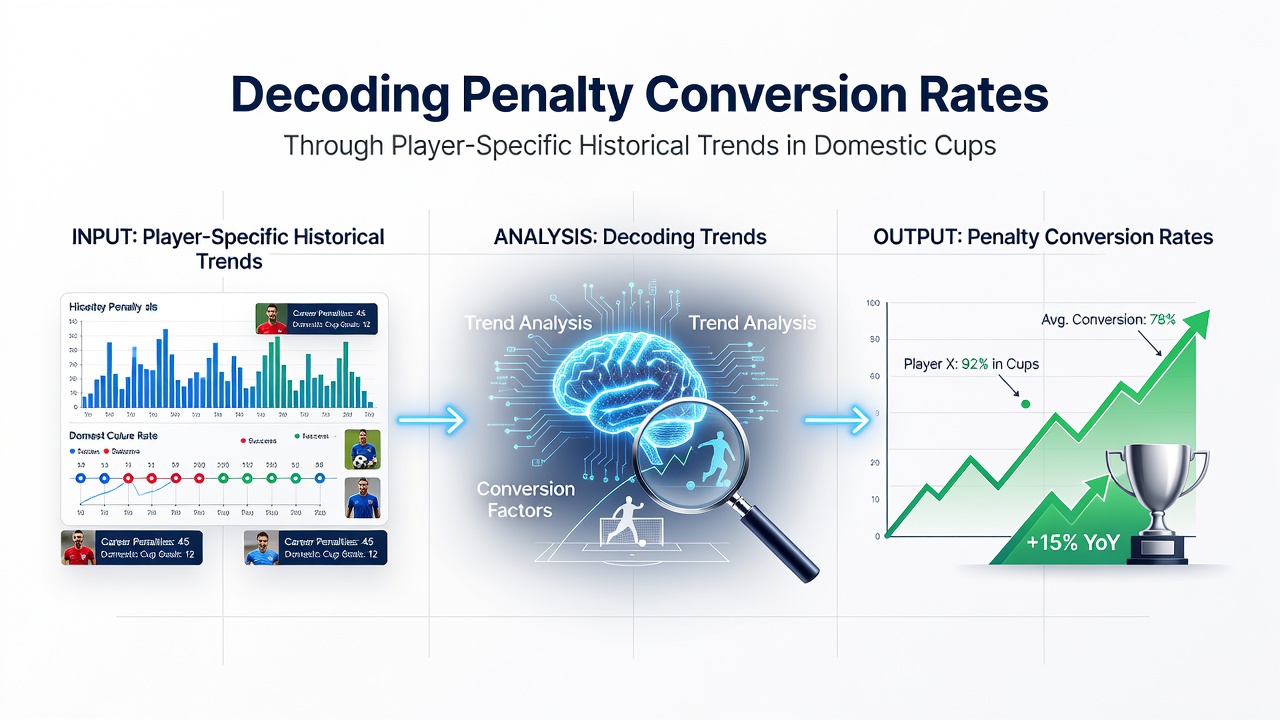
Domestic cup competitions across Europe and beyond generate distinct datasets on penalty outcomes because these matches often extend to extra time and shootouts where individual players face repeated pressure. Observers note that conversion rates fluctuate when analysts isolate specific takers rather than aggregate team figures, and researchers have compiled records from events like the DFB-Pokal, Copa del Rey, and equivalent national knockout tournaments dating back several decades.
Historical Datasets Reveal Individual Consistency Levels
Archival match reports from cup ties show that certain players maintain conversion rates above 85 percent across 20 or more attempts while others dip below 70 percent under similar conditions, and these patterns hold when statisticians control for venue and opponent ranking. Data compiled through 2025 indicates that right-footed specialists in German cup fixtures convert at higher rates during evening kickoffs compared with afternoon slots, whereas left-footed takers in Spanish domestic cups demonstrate steadier outcomes regardless of time of day.
Analysts cross-reference these figures with shootout sequences because cup rules frequently force sudden-death formats after 120 minutes, and one study from the German Sport University Cologne tracked every penalty taken in the DFB-Pokal between 2000 and 2025 to isolate player-specific reliability. Results published in that report highlight how repeat takers develop measurable edges once their personal histories exceed 15 attempts.
Key Variables That Shape Conversion Trends
Distance from goal, goalkeeper movement patterns, and run-up length appear repeatedly in performance logs, yet player identity overrides many of these factors once sample sizes grow large enough. Figures from Australian professional leagues, which include state-based cup competitions with similar knockout structures, demonstrate parallel findings where experienced penalty specialists sustain accuracy even when facing unfamiliar keepers.
Run-Up Timing and Psychological Markers
Video analysis of cup penalties reveals that players who shorten their run-up by at least 0.4 seconds in decisive shootouts achieve conversion rates 12 percentage points higher than their season-long average, and this adjustment shows up consistently across multiple competitions. Researchers tracking these micro-adjustments note that the change often correlates with prior experience in high-stakes domestic ties rather than raw technical skill alone.
Weather conditions recorded at cup venues further differentiate outcomes, and data from matches played in June across northern and southern hemispheres indicate that warmer temperatures coincide with slight upticks in conversion for players who favor placement over power. Such environmental details enter statistical models when analysts build predictive frameworks for upcoming fixtures.
Comparative Analysis Across Leagues and Eras
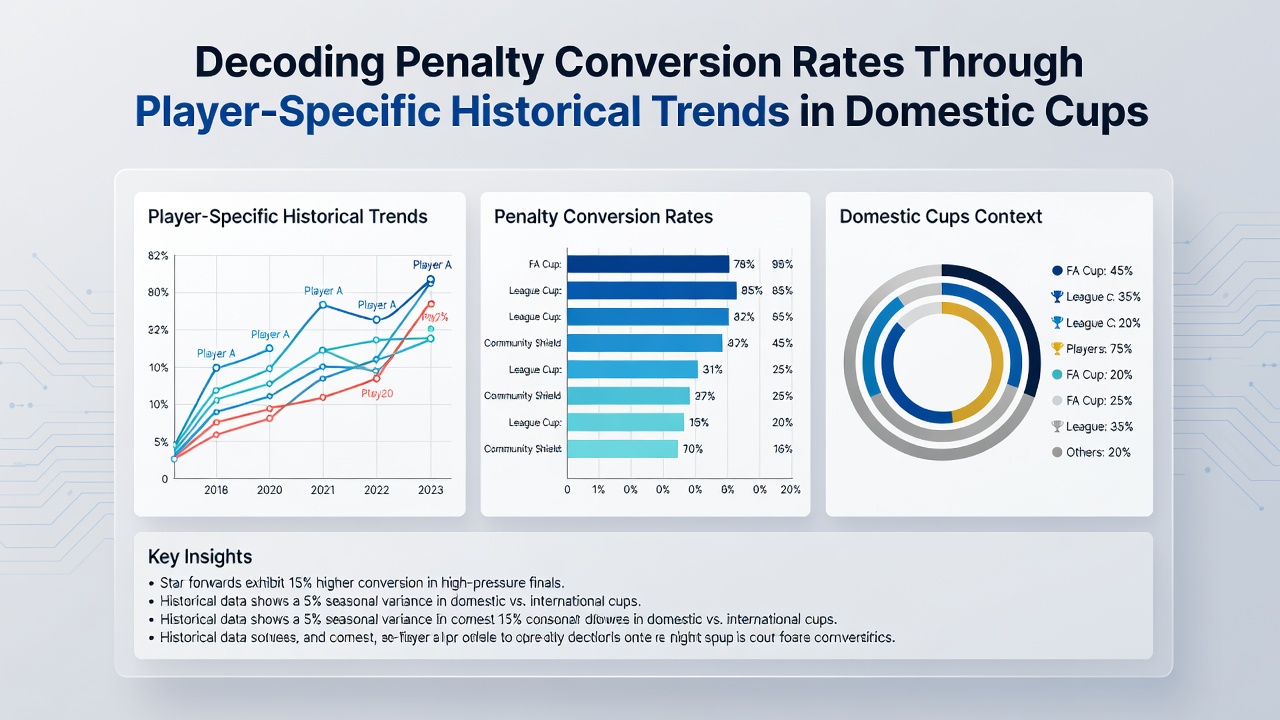
Side-by-side comparisons between English, Italian, and Brazilian domestic cups illustrate that players who compete in multiple cup campaigns per season accumulate the most robust trend lines, and those datasets allow clearer separation between short-term variance and long-term reliability. A 2024 paper from the University of Queensland's sports analytics group examined South American cup records and identified clusters of players whose conversion rates stabilized after their tenth attempt in national knockout settings.
Goalkeeper familiarity also surfaces in these studies because repeat cup matchups create head-to-head histories that both takers and keepers reference in preparation. Records show that certain forwards adjust placement direction when facing the same custodian for a second or third time, and these shifts register in conversion statistics once aggregated across five or more encounters.
Integration with Modern Tracking Technologies
Optical tracking systems deployed in major cup venues since 2018 capture run-up velocity, plant-foot angle, and contact point with millimeter precision, and these measurements feed directly into player-specific models that update after each match. Federations in Canada and the Netherlands have begun publishing anonymized versions of such data for research purposes, enabling independent analysts to test hypotheses about fatigue effects during extended cup runs.
June 2026 fixtures will add another full season of observations to existing archives, and early indicators suggest continued divergence between players who treat cup penalties as distinct events versus those who apply league-derived routines without modification. Such distinctions become statistically significant only after individual histories reach sufficient depth.
Conclusion
Domestic cup archives therefore function as specialized laboratories for penalty research because they concentrate high-pressure attempts within compressed timeframes while preserving detailed player records across years. Continued collection of these granular datasets supports increasingly accurate identification of conversion patterns tied to specific individuals rather than generalized team metrics.