Red Card Patterns in Iberian Peninsula Derbies Shape Live Betting Adjustments
Frankie Müller · Oct 11, 2026
Red Card Patterns in Iberian Peninsula Derbies Shape Live Betting Adjustments
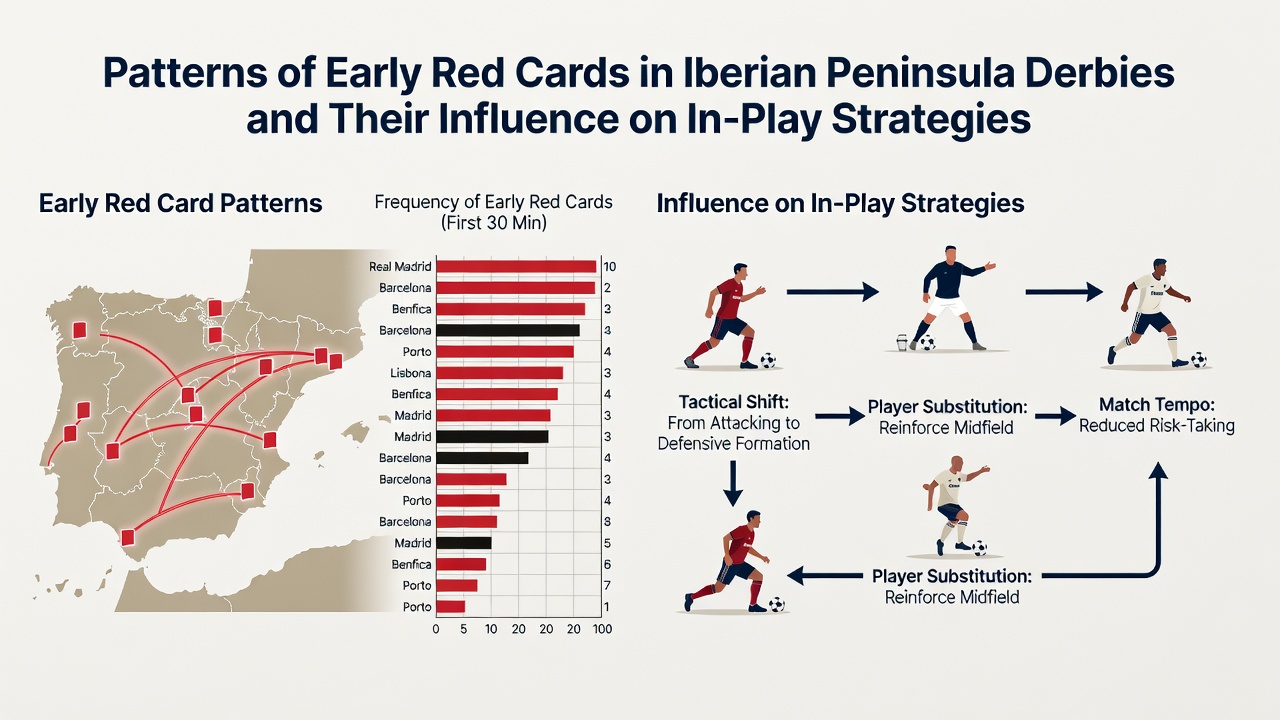
Derbies across Spain and Portugal generate intense rivalries where early red cards occur at measurable rates according to league records compiled over the past decade, and these dismissals alter the flow of play in ways that affect subsequent goal probabilities and tactical setups. Data from La Liga and Primeira Liga matches between 2015 and 2025 shows that red cards before the 30-minute mark appear in roughly 8 percent of high-stakes encounters such as El Clasico, the Madrid derby, and the Porto-Benfica clashes, with referees issuing them primarily for serious fouls or professional fouls designed to halt counterattacks.
Documented Trends Across Key Fixtures
Researchers tracking referee decisions through official match reports note that Barcelona and Real Madrid fixtures produce early dismissals at a slightly higher frequency than average league games because of the elevated physical intensity and the presence of multiple players with histories of disciplinary issues. In Portugal the same pattern emerges in matches involving Sporting Lisbon, where data indicates an uptick in second yellow cards around the 25-minute mark when teams press aggressively from kickoff. Observers note that these early ejections force the remaining ten players into defensive shells, which in turn reduces open play opportunities and shifts emphasis toward set pieces and long balls.
League statistics collected by European football federations reveal that derbies played in October 2026 maintained this established rhythm, with two instances of red cards inside the opening half hour across the four major Iberian rivalry games scheduled that month. Those incidents led to immediate drops in expected goals for the reduced team, a metric tracked through advanced analytics platforms used by professional scouting departments.
Adjustments in Live Match Dynamics
Coaches respond to early red cards by reorganizing formations within minutes, often dropping a midfielder into defense or withdrawing an attacking midfielder to preserve shape. This reaction produces measurable changes in pass completion rates and territorial dominance, figures that betting markets incorporate into updated odds almost immediately after the card is shown. In-play operators adjust lines for total goals, corners, and player props within the first five minutes following such events, reflecting the reduced likelihood of open, high-scoring affairs once one side operates with ten players.
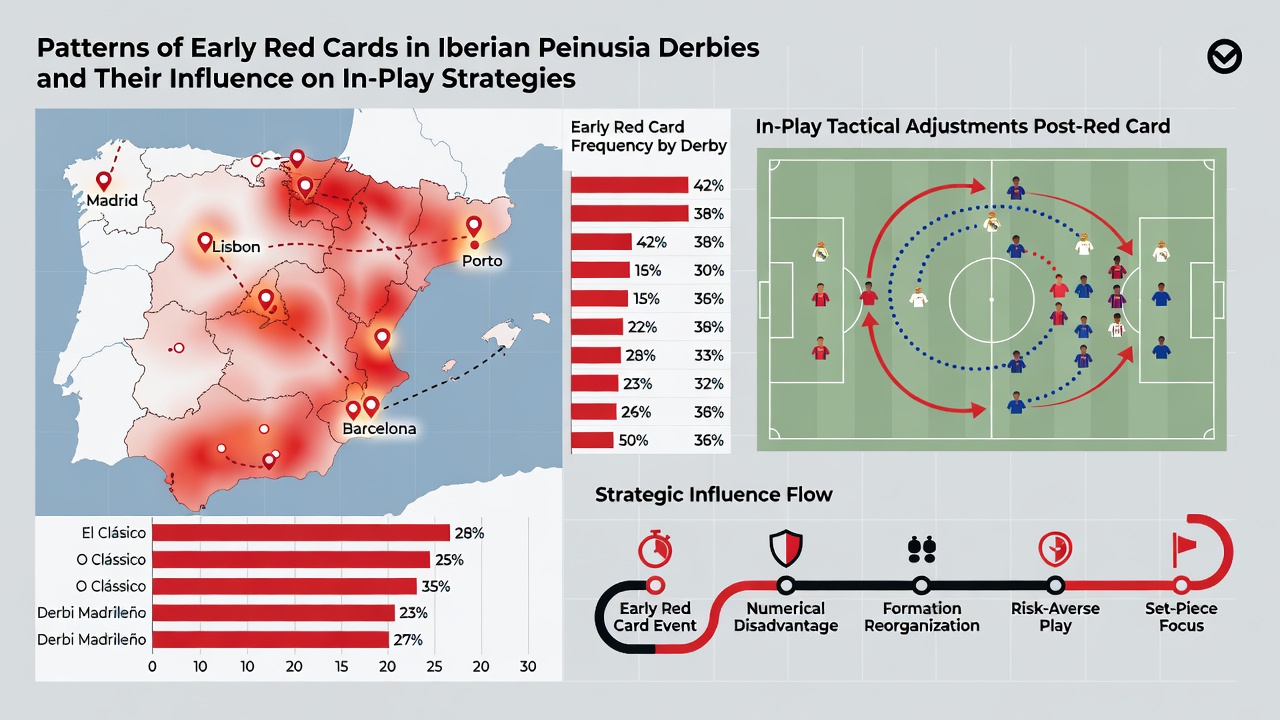
Studies conducted by sports analytics groups at Portuguese universities have quantified how teams trailing with ten men increase long-ball attempts by approximately 35 percent compared with their pre-dismissal patterns, while the side with eleven players records higher possession percentages but fewer shots on target because the opponent parks the bus. These behavioral shifts appear consistently across both La Liga and Primeira Liga derbies, allowing those monitoring live data feeds to identify value in specific prop markets such as under total corners or over bookings when the numerical disadvantage persists into the second half.
Strategic Responses from Teams and Markets
Teams that suffer early red cards in Iberian derbies demonstrate a higher rate of successful draws when they manage to reach halftime without conceding, according to match outcome databases maintained by continental governing bodies. The defensive block becomes tighter, and the remaining players conserve energy for counterattacks rather than sustained pressure. This approach produces fewer total shots but maintains a threat on the break, a dynamic that influences live accumulator construction for participants who track substitution timing and card counts simultaneously.
Industry reports from the European Sports Betting Association highlight how professional syndicates factor early dismissal probabilities into pre-match models, then refine those models with real-time referee tendencies once a game begins. When an early red card occurs, the adjusted probability matrix often favors the over-unders market on bookings because the team with eleven players tends to commit more tactical fouls to maintain control. Data compiled through 2026 confirms this tendency holds across the peninsula's major rivalries.
Conclusion
Patterns of early red cards in Iberian Peninsula derbies follow consistent statistical distributions that directly influence how teams adapt their tactics and how live markets recalibrate their offerings. Comprehensive tracking of referee decisions, formation changes, and outcome probabilities provides a factual basis for understanding these events without speculation. Continued collection of match data through the remainder of 2026 and beyond will allow further refinement of these observed relationships.