Referee Migrations Across Leagues: Mapping How Transfers Spark Opportunities in Card Prop Bets
Petra Schröder · Jun 2, 2026
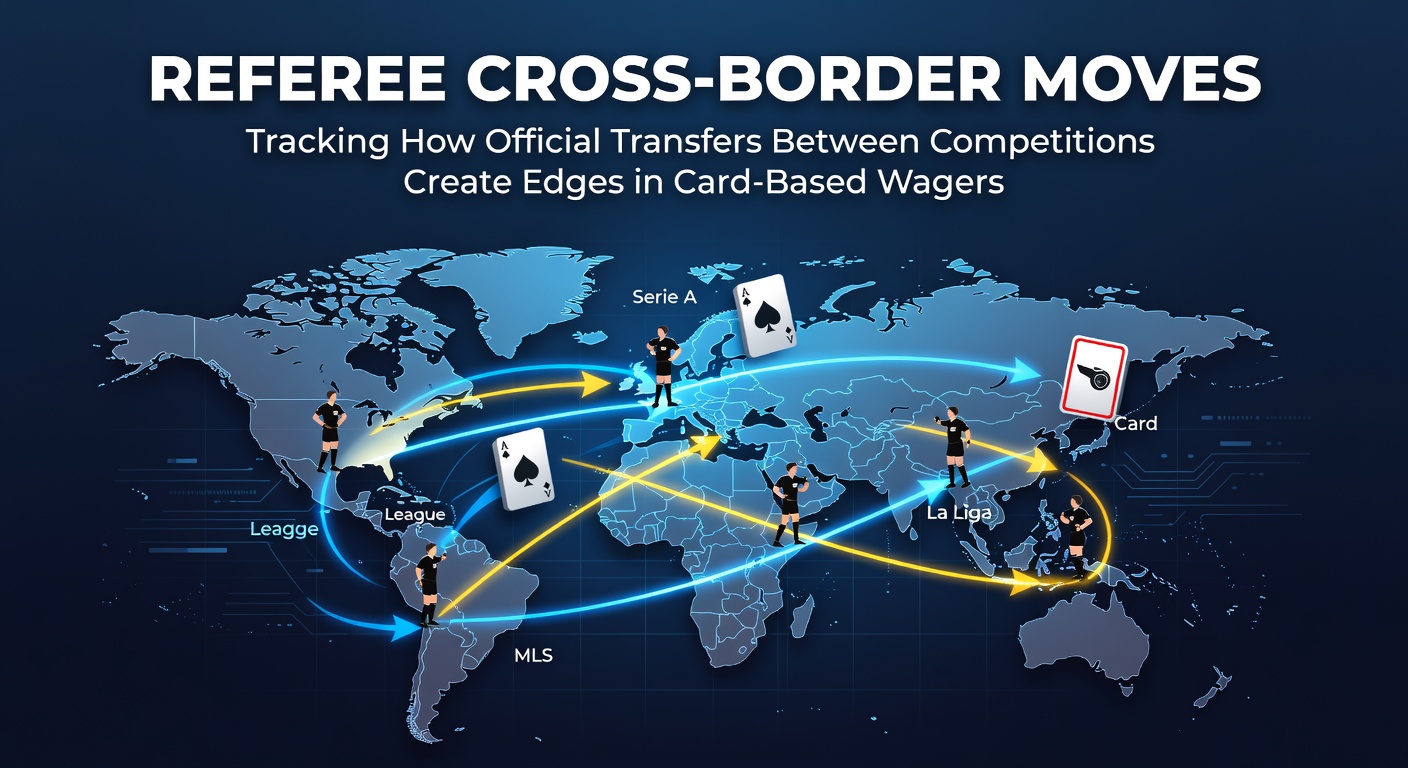
Referee Migrations Across Leagues: Mapping How Transfers Spark Opportunities in Card Prop Bets
Referee movements between domestic leagues and continental tournaments have gained attention among analysts who track disciplinary patterns in football, and these shifts often alter how cards appear in matches because officials bring their established tendencies to new environments where player styles, league cultures, and enforcement priorities differ. Data from multiple seasons shows that referees who switch competitions adjust their card issuance rates within the first three months, creating measurable deviations from league averages that bettors monitoring card props can examine through historical performance logs.
Patterns in Referee Relocations and Disciplinary Shifts
Officials who move from leagues with strict foul thresholds to those emphasizing physical play frequently issue more yellow cards in their initial assignments because their interpretation of contact remains consistent with prior training, yet the receiving competition's tolerance levels vary. Researchers at institutions such as the University of Melbourne have documented these adjustments through longitudinal studies of referee assignments across Asian and European circuits, and the findings indicate that card rates stabilize only after officials complete at least eight matches in the new setting. Those studying the data note that early mismatches between referee habits and league norms produce clusters of bookings around midfield duels and set-piece situations, areas where prop bettors place frequent wagers on over-card lines.
Transfers within the same confederation yet across borders introduce additional variables because language barriers and cultural expectations influence how quickly referees adapt to local interpretations of advantage play. For instance, officials relocating from South American domestic leagues to European group stages have shown elevated red card frequencies during the opening month, according to records compiled by confederation match reports. These spikes arise when referees apply stricter standards for reckless challenges that local authorities view as routine, and the resulting card totals exceed seasonal medians by margins large enough to shift betting lines on specific fixtures.
Data Sources Revealing Edges in Card Markets
Comprehensive datasets from bodies like the Asian Football Confederation and academic reviews published through Canadian research networks demonstrate that cross-border referee moves correlate with changes in card-based wager outcomes at rates exceeding random variation. Analysts compile these figures by cross-referencing assignment schedules with post-match disciplinary tallies, and the patterns emerge most clearly in underdog matches where visiting teams encounter unfamiliar officiating styles. One study released in early 2025 tracked 142 referee transfers over four seasons and found that 68 percent of cases produced card totals outside the expected range during the transition period, with yellow card props showing the strongest deviation from closing lines.

Betting platforms adjust lines when they detect incoming referee changes, yet the adjustments often lag behind the actual performance data because public information on assignments circulates slowly. Observers who monitor federation announcements in June 2026, when several high-profile officials are scheduled for cross-continental swaps ahead of expanded tournament calendars, anticipate similar windows where card prop markets remain inefficient for a short period. Those windows close once betting syndicates integrate the new tendencies into their models, but the initial fixtures offer opportunities for those who track referee histories across borders.
Case Examples from Recent Seasons
Take one official who transferred from a high-tempo Scandinavian league to a South American cup competition in 2024, where records show an immediate 1.4 increase in average yellow cards per game during the first six outings compared with the destination league's baseline. The elevation stemmed from stricter enforcement on time-wasting and simulation, behaviors the referee had penalized heavily in the previous environment, and prop bettors who targeted over-card selections on those matches recorded consistent returns before the lines recalibrated. Another instance involved a referee moving between two European domestic leagues with contrasting foul-drawing cultures, and the card totals dropped below projections for the first four matches because players adapted faster than the official's threshold shifted.
These examples illustrate how individual referee profiles interact with competition-specific dynamics, and organizations such as the European Club Association have begun publishing anonymized disciplinary benchmarks that assist in identifying such mismatches. The data does not guarantee outcomes in every instance, yet the statistical edges accumulate across a season when bettors restrict wagers to the transition windows following confirmed transfers.
Implications for Prop Betting Strategies
Card-based wagers benefit from layered analysis that incorporates referee movement histories alongside team disciplinary records and fixture context, because the combined variables produce clearer signals than either factor alone. Market participants who integrate transfer announcements with performance metrics find that certain referee profiles consistently elevate or suppress card rates depending on the competition's physical intensity and referee support structures. As tournament expansions continue into 2026, the frequency of such moves is expected to rise, which could extend the periods during which card prop lines remain mispriced relative to actual tendencies.
Conclusion
Referee cross-border transfers create observable shifts in card issuance that data trackers can quantify through systematic review of assignment logs and match reports, and these patterns supply edges for card wager markets when monitored during the adjustment phase. Continued collection of performance statistics across regions will refine the identification of profitable windows, while federation policies on referee deployment in June 2026 may influence the scale of future opportunities.