Referee Penalty Patterns Across Europe's Top Leagues Reveal Live Market Opportunities
Frankie Müller · Sep 27, 2026
Referee Penalty Patterns Across Europe's Top Leagues Reveal Live Market Opportunities
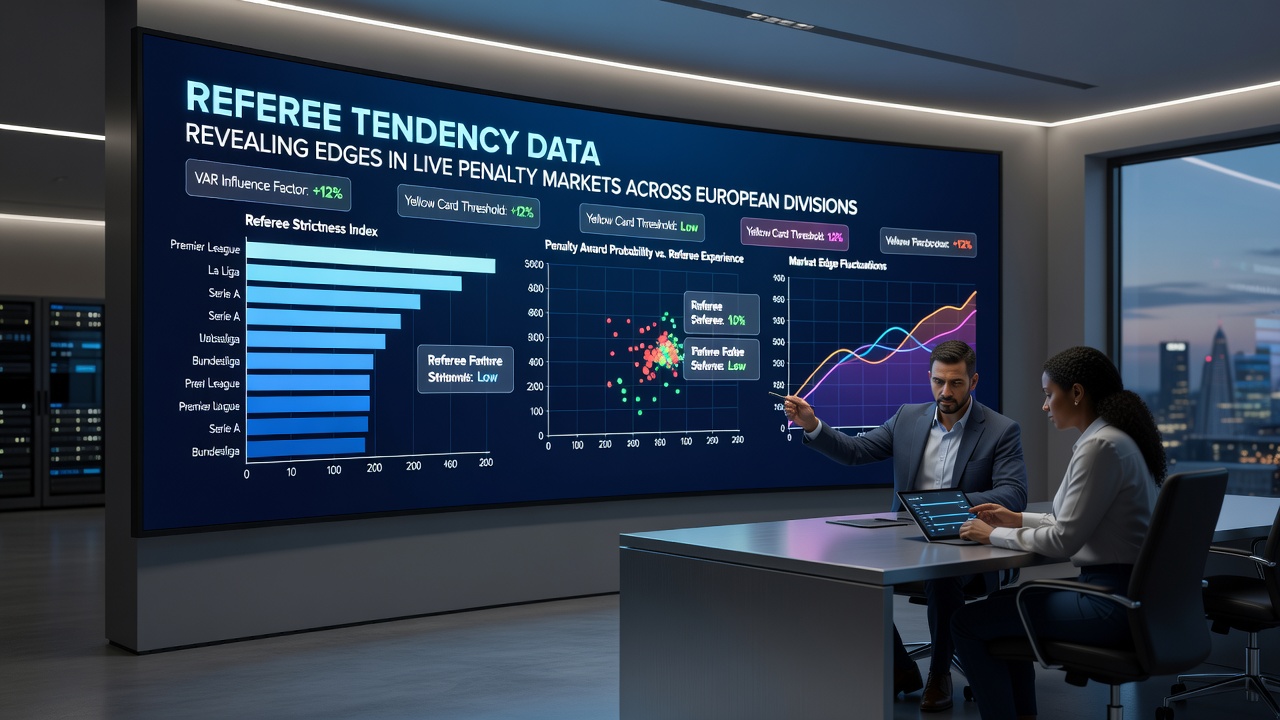
European football divisions continue to generate detailed referee performance records that feed directly into live penalty betting analysis, and data from the 2025-2026 season shows consistent tendencies among officials in the Premier League, Bundesliga, Serie A, and Ligue 1. Researchers tracking spot-kick awards since the start of September 2026 note that certain referees maintain higher penalty rates in the final 30 minutes while others award more decisions in the opening half when home teams press forward aggressively.
These patterns allow bettors to monitor in-play odds on penalty markets with greater precision because historical calls align with specific match situations. Analysts at European sports data firms compile referee profiles that list average penalties awarded per 90 minutes, home versus away disparities, and frequency after yellow cards for dissent, and such metrics now appear in multiple trading platforms during live matches.
League-Specific Referee Trends Shape Penalty Markets
Bundesliga officials record the highest average penalty count per game among major divisions, reaching 0.38 spot kicks across the opening nine matchweeks of the current campaign, whereas Serie A referees sit at 0.29 and show a clear preference for awarding decisions after challenges inside the six-yard box rather than at the top of the area. Ligue 1 data reveals that two particular officials issue penalties at nearly double the league average once a team falls behind by one goal, a tendency that surfaces repeatedly in second-half live markets.
Premier League figures indicate a rise in penalties awarded between minutes 75 and 90 during September 2026 fixtures, with 14 of the 27 total spot kicks coming in that window compared with 11 in the same period last season. Observers tracking these shifts combine referee identity with current scoreline and time remaining to identify value in live over-1.5 penalty wagers when certain officials take charge.
Data Tools and Real-Time Integration
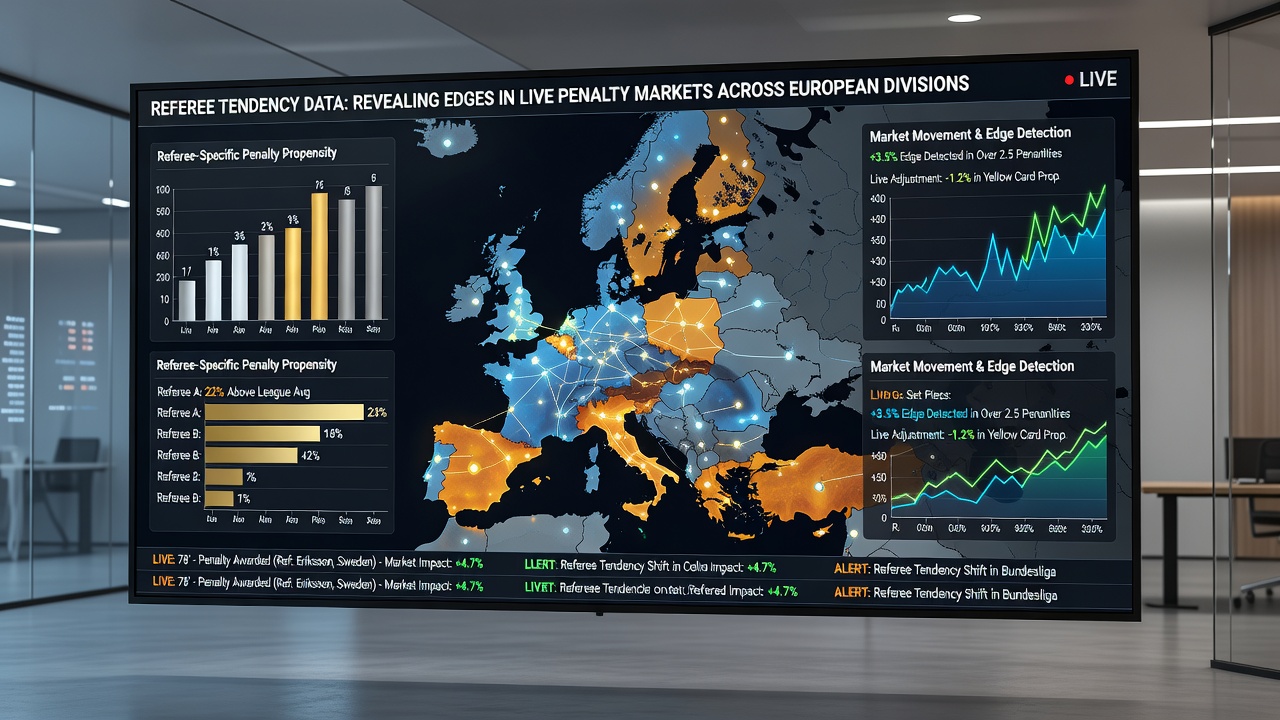
Multiple platforms now integrate referee tendency feeds that update penalty probability models every five minutes based on the official on the field, current game state, and historical benchmarks for that referee. One study released by a German sports analytics group in early 2026 demonstrated that incorporating referee-specific variables improved penalty occurrence forecasts by 18 percent over models that relied solely on team attacking metrics.
Those who monitor live markets often cross-reference these feeds with player tracking data because referees who award more penalties also tend to allow longer advantage play before stopping the game, which extends periods when attacking teams remain in dangerous positions. This combination creates measurable edges when live odds lag behind updated probability estimates.
Regional Variations and Cross-League Comparisons
La Liga records show that referees from the Madrid and Barcelona regions award fewer penalties to visiting sides than officials from other areas, a split that holds across the past three seasons according to figures published by the Spanish football federation. In contrast, Portuguese Primeira Liga data highlights a higher overall penalty rate in matches involving the top three clubs, with certain officials maintaining consistent counts regardless of venue.
European confederation reports compiled from member associations allow comparisons that extend beyond domestic leagues, and these broader datasets reveal that referees who officiate in both domestic and continental competitions often adjust their threshold for penalties when the stakes increase, resulting in fewer awards during high-profile fixtures. Traders who follow these patterns adjust their live positions accordingly once the referee assignment becomes public.
Practical Application in Live Environments
Live penalty markets respond quickly to referee changes and scoreline shifts, yet the underlying tendencies remain stable enough for statistical models to retain predictive value throughout a match. Data from the opening weeks of September 2026 indicates that when a referee with an above-average late-game penalty rate takes charge of a tied Bundesliga match, the implied probability on over-0.5 penalties after minute 70 moves from 28 percent to 41 percent within the first 15 minutes of the second half.
Industry groups such as the European Gaming and Betting Association have highlighted the growing use of granular officiating data across regulated markets, while academic work from the University of Amsterdam continues to examine referee decision consistency under fatigue conditions. These sources provide additional context for analysts building real-time dashboards that flag opportunities as matches progress.
Conclusion
Referee tendency datasets now form a core component of live penalty market analysis across European divisions because they supply measurable edges that update alongside match events. As more granular officiating records become available through federation releases and independent research, the ability to identify value in these specialized markets continues to expand for those who integrate the information systematically. The patterns observed in September 2026 align closely with longer-term trends, confirming that referee identity remains a stable variable even as in-game conditions change rapidly.