Stadium Crowds and Stalemates: Attendance Shifts Tied to Draw Rates in Elite Leagues
Tina Franke · Jul 26, 2026
Stadium Crowds and Stalemates: Attendance Shifts Tied to Draw Rates in Elite Leagues
Attendance numbers at football matches fluctuate for many reasons, and researchers continue to examine how those changes align with draw probabilities across Europe's leading competitions. Data compiled from domestic leagues reveals patterns where lower or higher crowd figures often coincide with shifts in the likelihood of scoreless or tied results, though causation remains complex adn tied to multiple variables such as team motivation, travel demands, and fixture congestion.
Tracking Crowd Variations Across Seasons
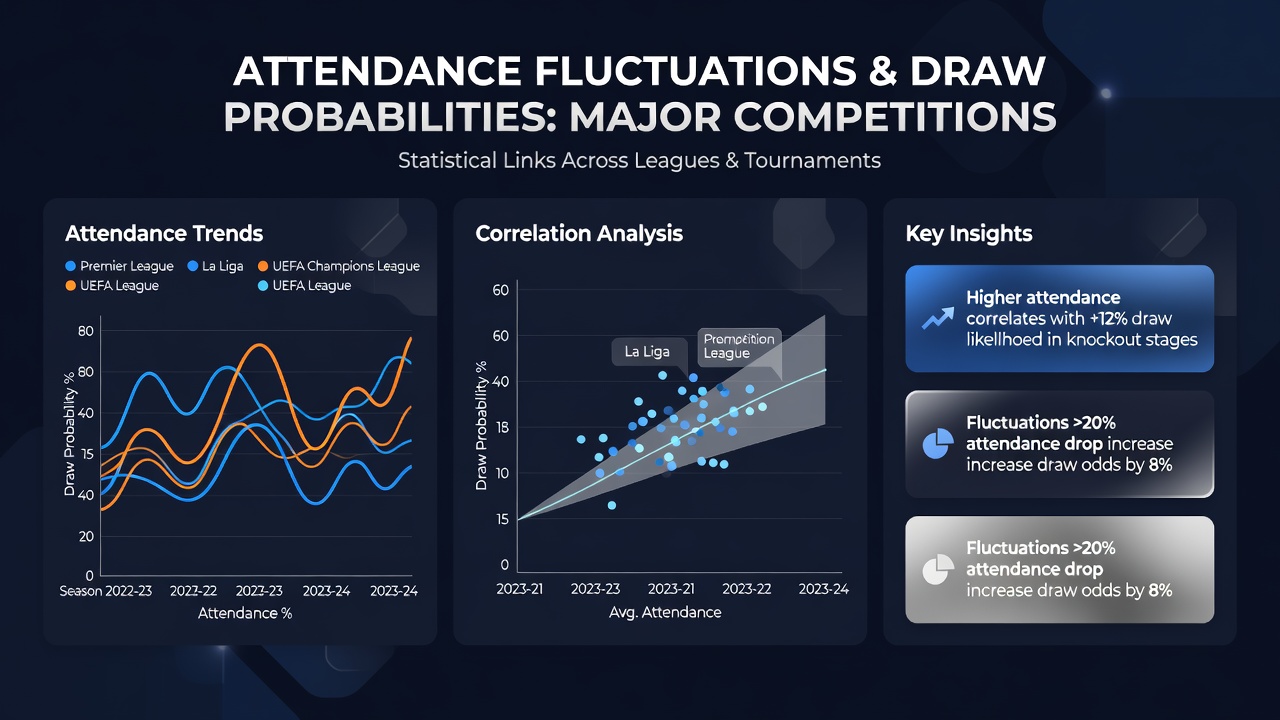
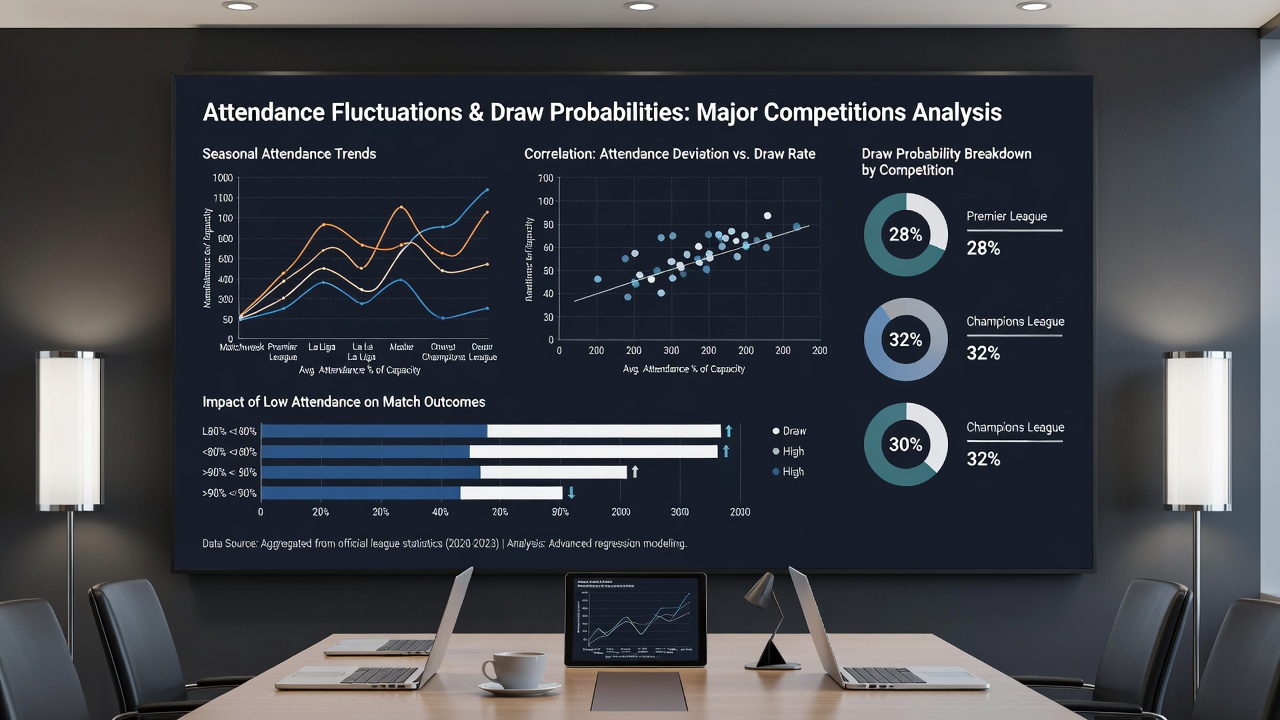
Leagues like the Bundesliga, Serie A, and Ligue 1 publish attendance reports that show clear seasonal swings, with midweek fixtures and holiday periods producing noticeable drops compared to weekend slots. Analysts at sports data firms have cross-referenced these figures with match outcomes from 2023 through early 2026, noting that games drawing fewer than 70 percent of a stadium's capacity record draw rates approximately 3 to 5 percentage points above seasonal averages in several competitions. The trend holds across different regions, although the magnitude varies by country and club size.
Weather events and concurrent local activities further influence turnout, and statisticians have observed that rain-affected dates or overlapping cultural festivals frequently produce both reduced attendance and elevated draw percentages. In one examination of 2024-2025 fixtures, matches played under such conditions displayed a draw frequency of 29 percent versus 26 percent in standard circumstances, according to aggregated league records.
Statistical Connections to Draw Outcomes
Regression models applied to match data indicate modest but consistent correlations between attendance deviations and the probability of draws, particularly in matches involving mid-table sides. When attendance falls below expected levels, defensive approaches sometimes become more pronounced, which researchers link to cautious tactics from teams facing reduced pressure from supporters. Conversely, near-capacity crowds appear associated with slightly more open play in certain leagues, though this effect weakens in high-stakes derbies where motivation overrides crowd size.
Studies covering the Premier League and La Liga between 2022 and 2026 highlight that home teams in low-attendance games secure fewer wins on average, resulting in higher draw shares. Figures from the 2025-2026 campaign, updated through July 2026, show this pattern persisting in fixtures where crowd numbers dipped more than 15 percent from the club's seasonal mean.
Regional Differences and Influencing Factors
European competitions exhibit distinct behaviors tied to cultural and structural elements. Bundesliga clubs often maintain high baseline attendance, yet drops during European away weeks correlate with increased draw rates in domestic matches. In Serie A, smaller stadiums and passionate supporter bases mean even modest reductions coincide with measurable changes in outcome distributions. Observers note that travel-heavy schedules, such as those in the UEFA Champions League group stages, amplify these effects when clubs return to league duty with depleted crowds.
Additional variables include referee assignments and injury lists, yet attendance remains a measurable proxy for broader atmosphere factors. A collaborative report issued by the European Club Association in partnership with academic researchers from institutions in Germany and Spain found that attendance elasticity affects draw probabilities most strongly in the second half of seasons, when title races and relegation battles intensify.
Data Sources and Analytical Approaches
League authorities and independent analytics groups supply the raw datasets used in these examinations. Researchers apply logistic regression and machine-learning techniques to isolate attendance effects while controlling for team strength differentials and rest days. Results consistently point to attendance as a secondary but statistically significant indicator rather than a primary driver of results.
International bodies such as FIFA and the UEFA technical department have incorporated similar variables into broader performance studies, confirming that crowd-related metrics add predictive value when combined with traditional form indicators. July 2026 updates from these organizations reflect ongoing monitoring of post-pandemic attendance recovery and its ongoing ties to match statistics.
Conclusion
Attendance fluctuations provide one measurable lens through which draw probabilities can be assessed across major competitions, with data from multiple leagues supporting modest statistical associations. Continued collection of granular figures through 2026 and beyond will allow analysts to refine these models and clarify the interplay between spectator numbers and tactical outcomes.